

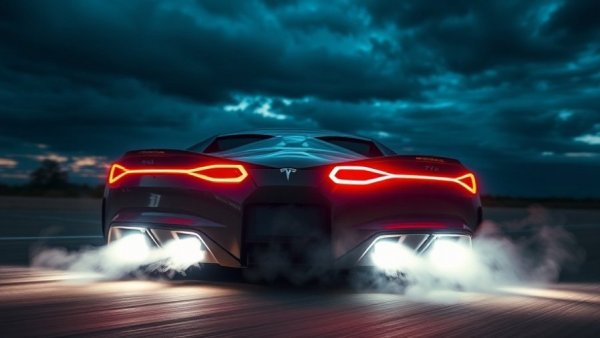
Will the Tesla Roadster Really Recharge Its Air Tanks?
The recent excitement surrounding the Tesla Roadster has sparked a spirited discussion on its innovative features, specifically the controversial claim that it can autonomously refill its air tanks. Elon Musk, Tesla's CEO, asserted this feature during the Roadster reveal, but many are skeptical. A recent analysis dives deep into why this claim may not hold water, drawing on principles of physics and practical implications.
In 'No, The Tesla Roadster Won’t Refill Its Air Tanks (Bet)', the discussion dives into the practicality of Tesla’s claims about their Roadster, prompting a closer look at the implications of such features.
Understanding the Science Behind the Claims
At the heart of the skepticism is the term 'self-refilling.' How exactly would the Roadster manage to pressurize its air tanks without external help? An engineering background sheds light on this. The notion relies on pressing air to extreme pressures, which isn’t just a simple task. Utilizing thermodynamics, it becomes evident that significant energy is required to achieve the desired outcomes. For instance, estimates suggest it could take around 35-70 kilowatt-hours solely to recharge these tanks, possibly draining a third of the vehicle's battery just for this 'party trick.'
Evaluating Real-World Applications
Real-world air compression data emphasizes that the energy necessary for this operation is substantial. Observations indicate that commercial-grade compressors typically need between 60-100 kilowatt-hours for similar air pressure applications. This raises questions about the practicality of having such a system integrated within the car. Would Tesla include a robust air compressor taking up space and battery life?
Analyzing Practicality for Everyday Users
Let’s consider the average auto owner: would they realistically utilize the Roadster’s self-refilling feature? With limited use cases that justify the need for such a sophisticated mechanism, many could find it unnecessary. Most users would prefer a car that offers reliable performance without the quirks. Moreover, concerns about the safety and noise stemming from high-pressure air systems add to the skepticism surrounding this feature.
The Bigger Picture: Is This Just a Marketing Stunt?
Given that Musk has a history of ambitious claims, one must wonder whether this feature is being promoted more for marketability than practicality. Customers could be enticed by ideas of innovative technology, only to be left disappointed if the reality doesn’t match the hype.
Final Thoughts: Evaluating Risk vs. Reward
While the promise of a Roadster that can refill its air tanks sounds flashy, understanding the practical and scientific implications reveals it may be less feasible than initially presented. Consumers seeking out the Tesla Roadster should weigh these considerations and stay informed about its actual capabilities as the market release approaches.



Write A Comment